




Reviewed by Russell Noga, Licensed Insurance Agent — Last updated November 28, 2026
WHAT TO KNOW FIRST
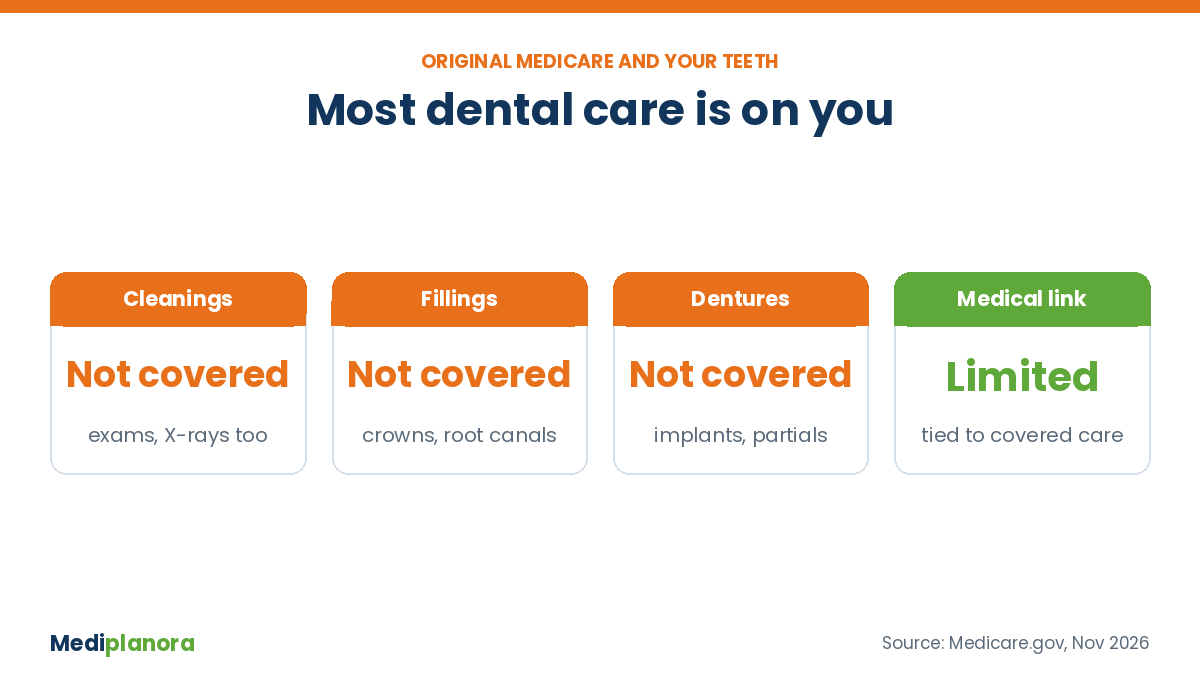
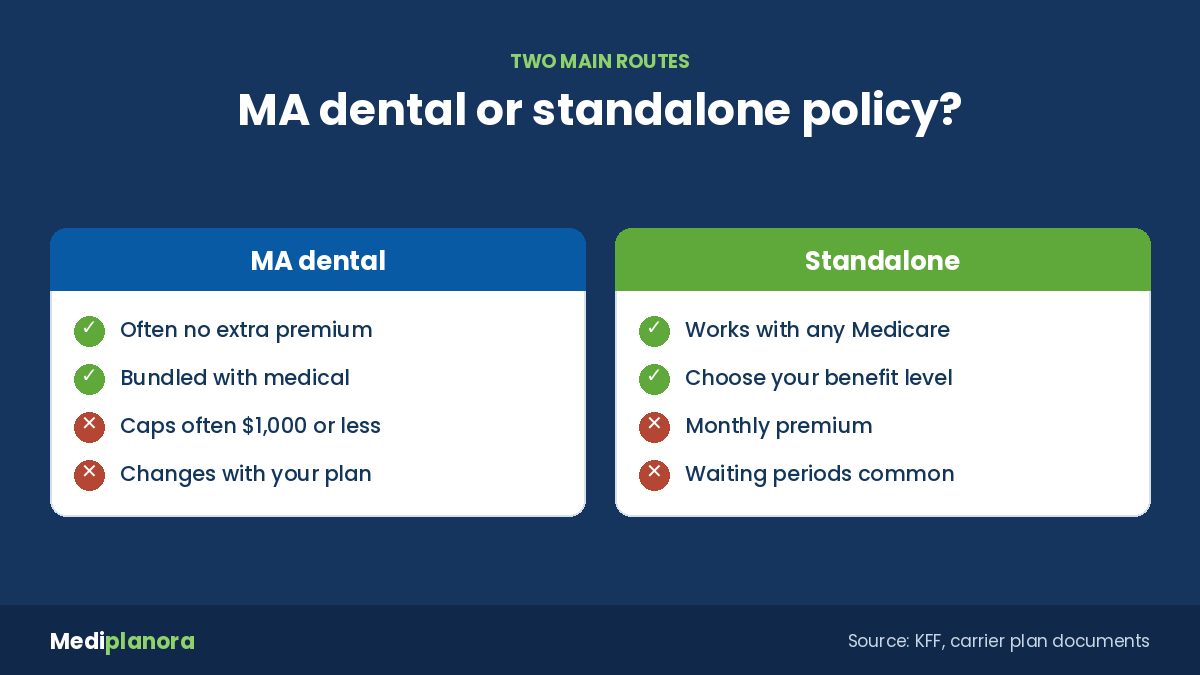
Dental insurance for seniors is coverage you add on top of Medicare, because Original Medicare does not pay for routine cleanings, fillings, extractions, dentures or implants. The three main routes are dental benefits built into a Medicare Advantage plan, a standalone dental policy you buy on your own, or Medicaid dental if you qualify in your state.
2027 by the Numbers
47%
of Medicare beneficiaries had no dental coverage in 2019 (KFF)
98%
of individual Medicare Advantage plans offered some dental benefit in 2026 (KFF)
$874
average yearly out-of-pocket dental cost among beneficiaries who used dental care (KFF, 2018 data)
1 in 5
dental users on Medicare spent more than $1,000 out of pocket in a year (KFF)
Turning 65 often means losing the dental plan that came with a job. Medicare was never designed to replace it. KFF found that nearly half of people on Medicare, about 24 million, had no dental coverage at all in 2019, and roughly the same share went a full year without seeing a dentist. Skipped cleanings tend to turn into crowns, root canals and extractions, and those bills arrive at the stage of life when income is usually fixed.
This page is Mediplanora’s hub for dental, vision and hearing coverage after 65. It covers what Medicare pays and refuses to pay, how dental benefits inside a Medicare Advantage plan work, how a standalone senior dental policy is built, what discount plans and Medicaid can do, and the fine print to read before you sign. Vision and hearing get their own section near the end, because the same gaps apply to glasses and hearing aids.