






Speak with a licensed insurance agent

1-866-316-7339

TTY user 711 Mon-Fri : 8am-9pm EST

Cancer Insurance vs Critical Illness: Which Policy Fits Someone on Medicare?

Reviewed by Russell Noga, Licensed Insurance Agent — Last updated November 27, 2026

THE SHORT VERSION

Cancer insurance vs critical illness comes down to breadth versus depth: a cancer policy covers one disease, often with ongoing treatment benefits, while critical illness insurance pays one lump sum for any of several listed conditions such as cancer, heart attack and stroke. For people 65 and older, age limits often settle the choice, because many critical illness policies stop accepting applicants in their mid-60s.

Both policies send cash to you, not to a doctor, and both sit on top of Medicare instead of replacing it. That is where the similarity ends. One is built to follow a single illness from diagnosis through months of treatment. The other is built to pay once, quickly, for whichever covered emergency happens first.

This article compares the two side by side using real product terms from carrier pages, then shows which one tends to fit common Medicare situations.
Compare cancer and critical illness coverage in your ZIP

See cash-benefit cancer plans from several insurance companies side by side.

Advertisement

The Core Difference in One Table

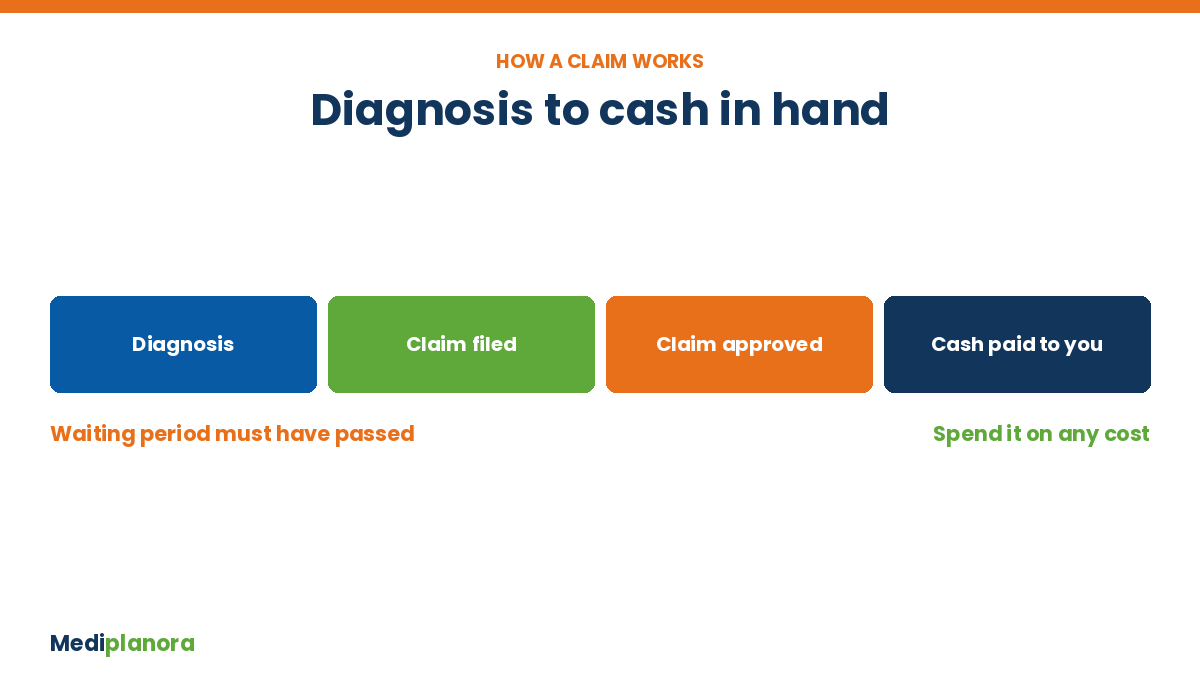
How a cancer insurance or critical illness claim works from diagnosis to cash payment

If you have read our main guide to cancer insurance, you know a cancer policy can pay either a lump sum at diagnosis or a schedule of benefits as treatment happens. Critical illness insurance almost always uses the lump-sum model, but spreads it across a list of conditions.

Cancer insurance Critical illness insurance
What triggers a payment A covered cancer diagnosis, and with treatment policies, each covered service A diagnosis of any condition on the policy’s list
How it pays Lump sum, per-treatment schedule, or both One lump sum per covered condition
Conditions covered Cancer only (some add heart attack and stroke by rider) Typically cancer, heart attack, stroke, and often kidney failure, organ transplant and more
Who gets the money You or someone you name You or someone you name
Best match Long, expensive treatment for one disease Broad protection against several sudden illnesses

Plain-English test: Ask which scenario worries you more: a long fight with cancer, or a sudden heart attack or stroke. The answer usually points to the right policy.

What a Critical Illness Policy Covers

Critical illness lists differ by company, so the list on the policy you buy is the one that counts. Mutual of Omaha’s individual critical illness product is a good example of a broad design. It pays a lump sum, with the check going to the policyholder rather than a provider.

ONE EXAMPLE POLICY

Mutual of Omaha critical illness: covered at 100%

✓

Cancer: internal cancer or malignant melanoma.

✓

Heart and brain: heart attack, stroke and Alzheimer’s disease.

✓

Organ and kidney: major organ transplant and kidney failure.

✓

Loss of function: blindness, deafness and paralysis.

✓

Partial benefit: coronary artery bypass surgery and coronary angioplasty pay 25%.

Benefit amounts run from $10,000 to $100,000. The catch for Medicare shoppers is the issue age: this product accepts applicants ages 18 to 64.

Why Age Limits Decide It for Many People on Medicare

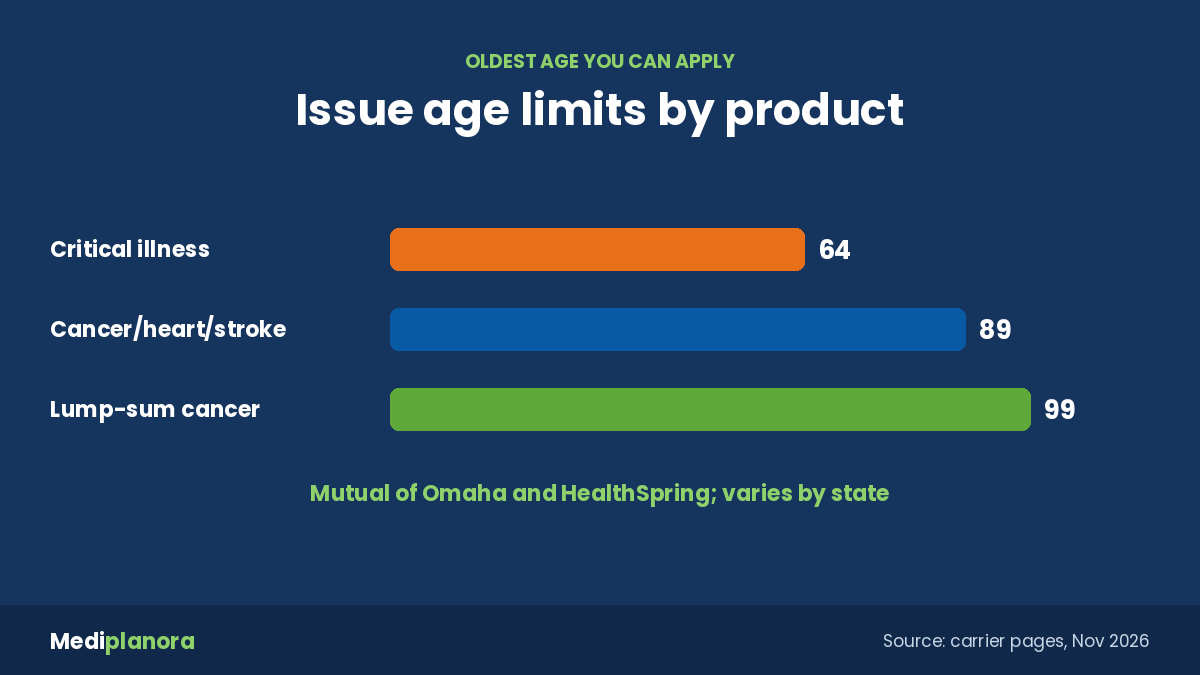
Cancer insurance vs critical illness: oldest issue age by product

Most people join Medicare at 65, which is past the cutoff on many critical illness products. Cancer-focused policies tend to accept older applicants. That gap means a 70-year-old may find cancer coverage easy to buy and broad critical illness coverage hard to find.

Product (carrier page, Nov 2026) Issue ages Conditions
Mutual of Omaha Critical Illness 18 to 64 Cancer, heart attack, stroke and six more at 100%
Mutual of Omaha Cancer, Heart Attack & Stroke 18 to 89 Cancer, heart attack and stroke at 100%
HealthSpring Lump Sum Cancer 18 to 99, varies by state Cancer; heart attack and stroke by rider

Ages and availability vary by state. Check the outline of coverage before applying.

Turning 65 soon? If a critical illness policy appeals to you, the window to apply may close at your next birthday. Coverage bought before the cutoff can usually be kept as long as premiums are paid, subject to the policy’s terms.

Already past the cutoff? A cancer, heart attack and stroke policy still covers three of the biggest conditions on a typical critical illness list, and is often sold to much older applicants.

Compare cancer insurance plans in your ZIP code

See cash-benefit cancer plans from several insurance companies side by side.

Advertisement

How Each Fits With Your Medicare Coverage

Your main Medicare coverage decides how much of a hole either policy has to fill. Under Original Medicare, chemotherapy in a doctor’s office or outpatient clinic typically costs 20% of the approved amount after the Part B deductible, with no yearly cap. A Medigap plan can pick up that 20%; a Medicare Advantage plan caps it at the plan’s yearly out-of-pocket limit.

MATCHING POLICY TO COVERAGE

Common Medicare setups

1

Original Medicare alone: the open-ended 20% makes a cancer policy with treatment benefits especially useful, because long treatment means long coinsurance bills.

2

Original Medicare plus Medigap: a Medicare Supplement plan such as Plan G covers most medical bills, so either policy works as income replacement. A modest lump sum is usually enough.

3

Medicare Advantage: a lump sum sized near your Medicare Advantage plan‘s yearly out-of-pocket limit can cover a bad year whether the cause is cancer or a heart attack.

4

Under 65 on Medicare due to disability: you may still be inside the critical illness age window, so compare both.

Claims, Waiting Periods and Fine Print

Both policy types are supplemental and both can be limited by pre-existing conditions, so the time to buy is while you are healthy. Beyond that, a few details deserve a close read.

Waiting periods. Mutual of Omaha’s cancer, heart attack and stroke policy pays nothing for cancer first diagnosed within 30 days of the effective date. Other carriers set their own periods by state.

What counts as cancer. Many policies pay the full amount only for internal cancer or malignant melanoma, and exclude pre-cancerous conditions and most skin cancers.

One payment or several. A lump-sum policy often pays once per condition. Cancer policies may offer a recurrence rider; HealthSpring’s can pay up to an additional 100% after two years with no advice or treatment.

Renewal. HealthSpring lists its cancer policies as guaranteed renewable for life. Check the renewal terms on any policy you consider.

Making the Call

If you are under the age cutoff and want protection against several sudden illnesses, critical illness insurance gives broader coverage for one premium. If you are already on Medicare at 65 or older, or cancer is the risk you worry about most, a cancer policy is easier to buy and can keep paying through a long treatment.

Compare cancer insurance plans in your ZIP code

See cash-benefit cancer plans from several insurance companies side by side.

Advertisement

Cancer vs Critical Illness: Common Questions

➤ Does critical illness insurance cover cancer?

Usually, yes. Most critical illness policies list cancer as a covered condition, along with heart attack and stroke. The policy’s definition of cancer decides which diagnoses pay the full benefit.

➤ Is cancer insurance or critical illness insurance better for seniors?

For many people over 65, cancer insurance is easier to get, because some critical illness products stop accepting applicants at 64. Critical illness gives broader coverage if you can still qualify.

➤ Can I have both cancer insurance and critical illness insurance?

Yes. Both generally pay you directly regardless of other coverage, so both can pay on the same cancer diagnosis. Make sure the combined premium is worth the overlap.

➤ Do these policies replace a Medigap or Medicare Advantage plan?

No. Both are supplemental cash policies. They do not pay doctors or hospitals and do not meet the requirement to have health coverage.

➤ Does a critical illness policy pay more than once?

It depends on the policy. Many pay once per covered condition, and some reduce or end coverage after a full payout. Read the benefit and termination sections before buying.

➤ What happens if I have a heart attack and only have cancer insurance?

A cancer-only policy would not pay. Some cancer policies offer a heart attack and stroke rider, and some products, such as Mutual of Omaha’s cancer, heart attack and stroke policy, include those conditions from the start.

➤ Are pre-existing conditions covered?

Often not. Both types of policies can limit or deny benefits for an illness diagnosed before coverage starts, which is why buying while you are healthy matters.

Have Questions?

Speak with a licensed insurance agent

1-866-316-7339

TTY users 711

Mon-Fri: 8am-9pm ET