




Reviewed by Russell Noga, Licensed Insurance Agent — Last updated November 27, 2026
IN ONE SENTENCE
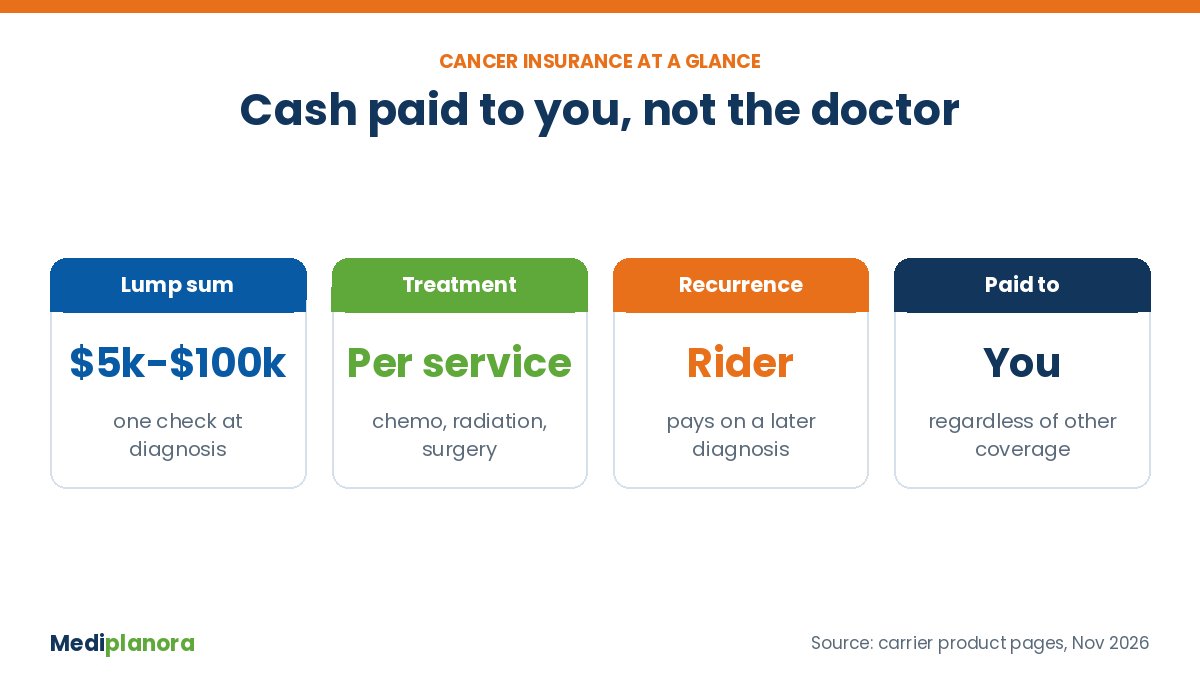
Cancer insurance is a supplemental policy that pays cash directly to you if you are diagnosed with a covered cancer, no matter what Medicare or your other coverage pays. It does not replace health coverage. It gives you money for the costs health plans leave behind, such as coinsurance, travel to treatment and bills at home.
2027 by the Numbers
2.1 million
new cancer diagnoses projected in the U.S. in 2026 (American Cancer Society)
70%
five-year relative survival for all cancers combined (ACS, people diagnosed 2015-2021)
20%
of the Medicare-approved amount you typically pay for outpatient chemo under Part B (Medicare.gov)
$292
2027 Part B deductible you meet before that 20% starts
The American Cancer Society projects about 2,114,850 new cancer diagnoses in the United States in 2026, or roughly 5,800 every day. The good news is that more people are living through it: five-year relative survival for all cancers combined has reached 70%. Longer treatment, though, often means more months of copays, coinsurance, gas, parking and lost income.
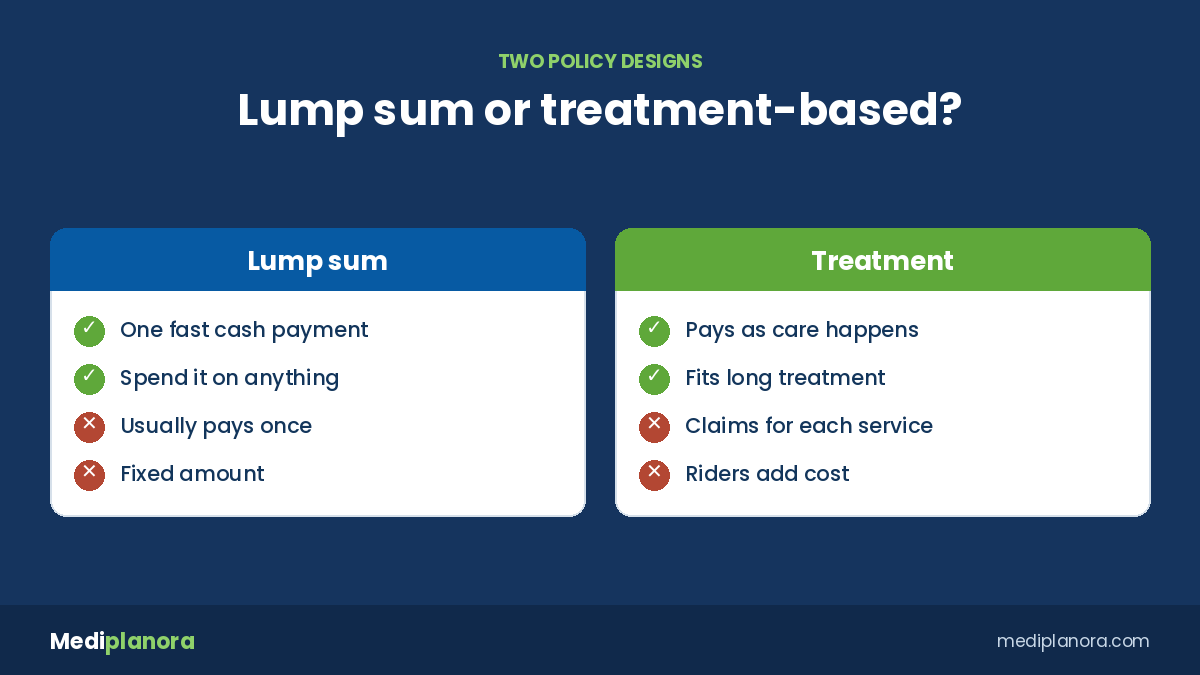
That is the gap a cancer policy is built for. This page is the starting point for everything on Mediplanora about cancer coverage. It explains the two main policy designs, what Medicare already pays for cancer care, what a policy costs, and the fine print that decides whether a claim gets paid. If you are still choosing your main coverage, start with our guide to Medicare Supplement plans, because the plan you pick there changes how much extra cash coverage you need.